

National Commission for Allied and Healthcare Professions (NCAHP) and Physiotherapy Profession in India
The healthcare sector in India has undergone major reforms to improve the quality and standardization of healthcare education and professional practice. One of the most important developments in this direction is the establishment of the National Commission for Allied and Healthcare Professions (NCAHP) under the National Commission for Allied and Healthcare Professions Act, 2021, enacted by the Government of India.
The NCAHP Act was introduced to regulate allied and healthcare professions across the country by creating uniform educational standards, professional ethics, competency-based training, and national registration systems. Physiotherapy has been recognized under this framework as a major allied healthcare profession contributing significantly to rehabilitation and patient care services.
What is NCAHP?
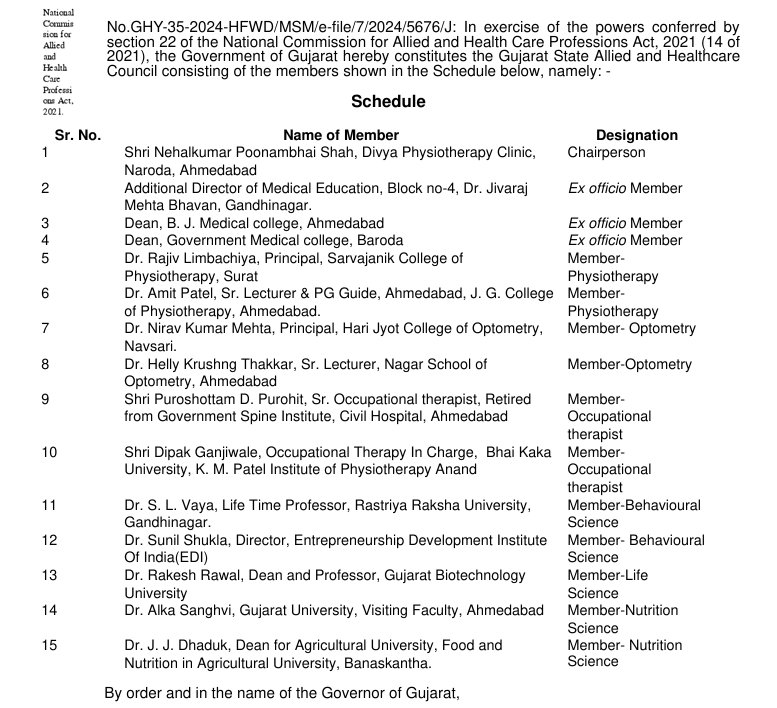
The National Commission for Allied and Healthcare Professions (NCAHP) is a statutory body established by the Ministry of Health and Family Welfare, Government of India. The commission regulates various allied and healthcare professions and aims to strengthen healthcare delivery systems through standardized education and professional accountability.
The objectives of NCAHP include:
- Standardization of allied healthcare education
- Competency-based professional training
- Maintenance of ethical clinical practice
- Development of national and state registers
- Promotion of patient safety and quality healthcare
- Strengthening multidisciplinary healthcare systems
- Encouraging evidence-based clinical practice and research
The Act recognizes several healthcare professions including Physiotherapy, Occupational Therapy, Optometry, Medical Laboratory Technology, Radiology and Imaging Technology, Nutrition and Dietetics, Audiology and Speech Therapy, Emergency Care Technology, and others.
Physiotherapy Under NCAHP
Physiotherapy has been recognized as an important Allied Healthcare Profession under the NCAHP framework. Physiotherapists are healthcare professionals trained in assessment, rehabilitation, pain management, functional restoration, and prevention of movement-related disorders.
The NCAHP framework has introduced a competency-based physiotherapy curriculum aimed at aligning Indian physiotherapy education with modern international rehabilitation standards.
The curriculum focuses on:
- Clinical competency
- Practical skill development
- Evidence-based rehabilitation
- Ethical and legal responsibilities
- Research orientation
- Communication and professional behavior
- Interdisciplinary healthcare practice
The new curriculum emphasizes practical learning and clinical exposure to ensure that physiotherapy graduates are professionally competent and clinically skilled.
Objectives of NCAHP in Physiotherapy Education
The implementation of NCAHP in physiotherapy aims to achieve several important goals:
- Standardization of Curriculum
- Competency-Based Learning
- Ethical Practice
- Research and Evidence-Based Practice
- Improved Healthcare Delivery
Clarification Regarding “Dr.” Prefix and “PT” Suffix
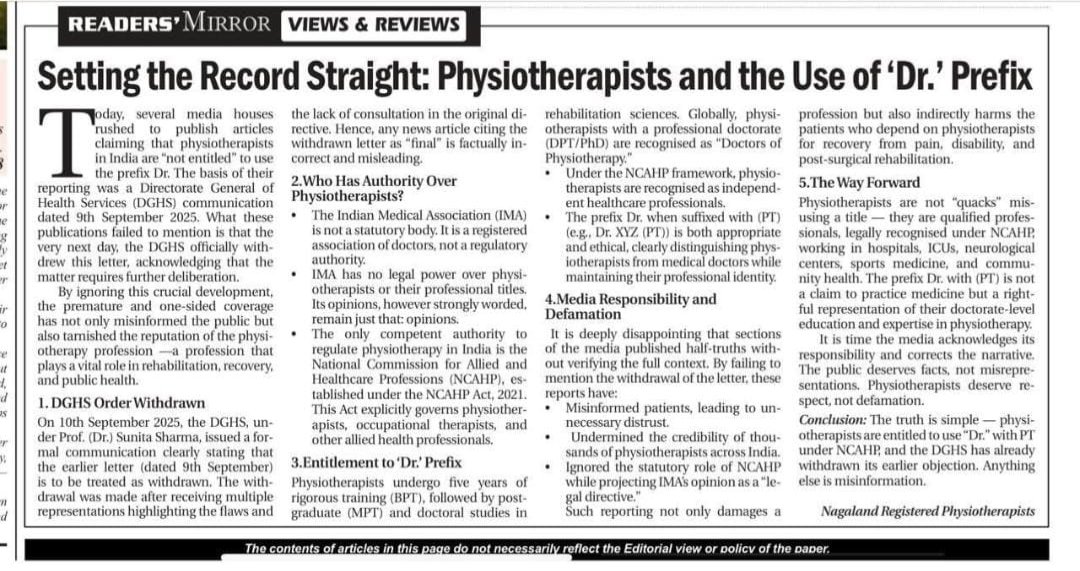
One of the most discussed issues in the physiotherapy profession in India has been the use of the “Dr.” prefix by physiotherapists.
The Competency-Based Physiotherapy Curriculum under NCAHP included references to the use of:
- “Dr.” as a professional prefix
- “PT” as a professional suffix
for physiotherapy professionals.
This led to widespread discussion within the healthcare community regarding professional identity and representation.
Examples commonly used include:
- Dr. ABC XYZ (PT)
- Dr. ABC XYZ, Physiotherapist
- ABC XYZ, PT
The inclusion of the “PT” suffix is intended to clearly identify the individual as a physiotherapist and avoid confusion with medical practitioners.
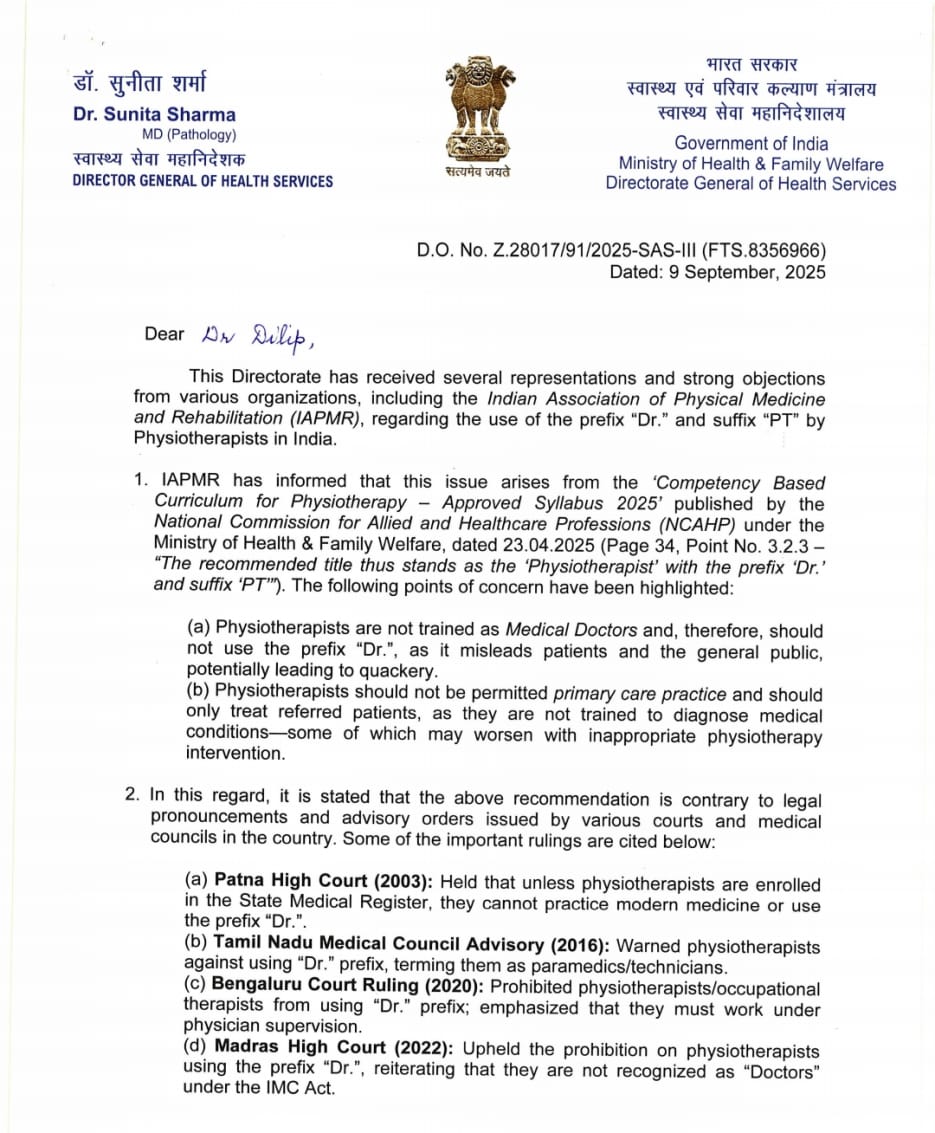
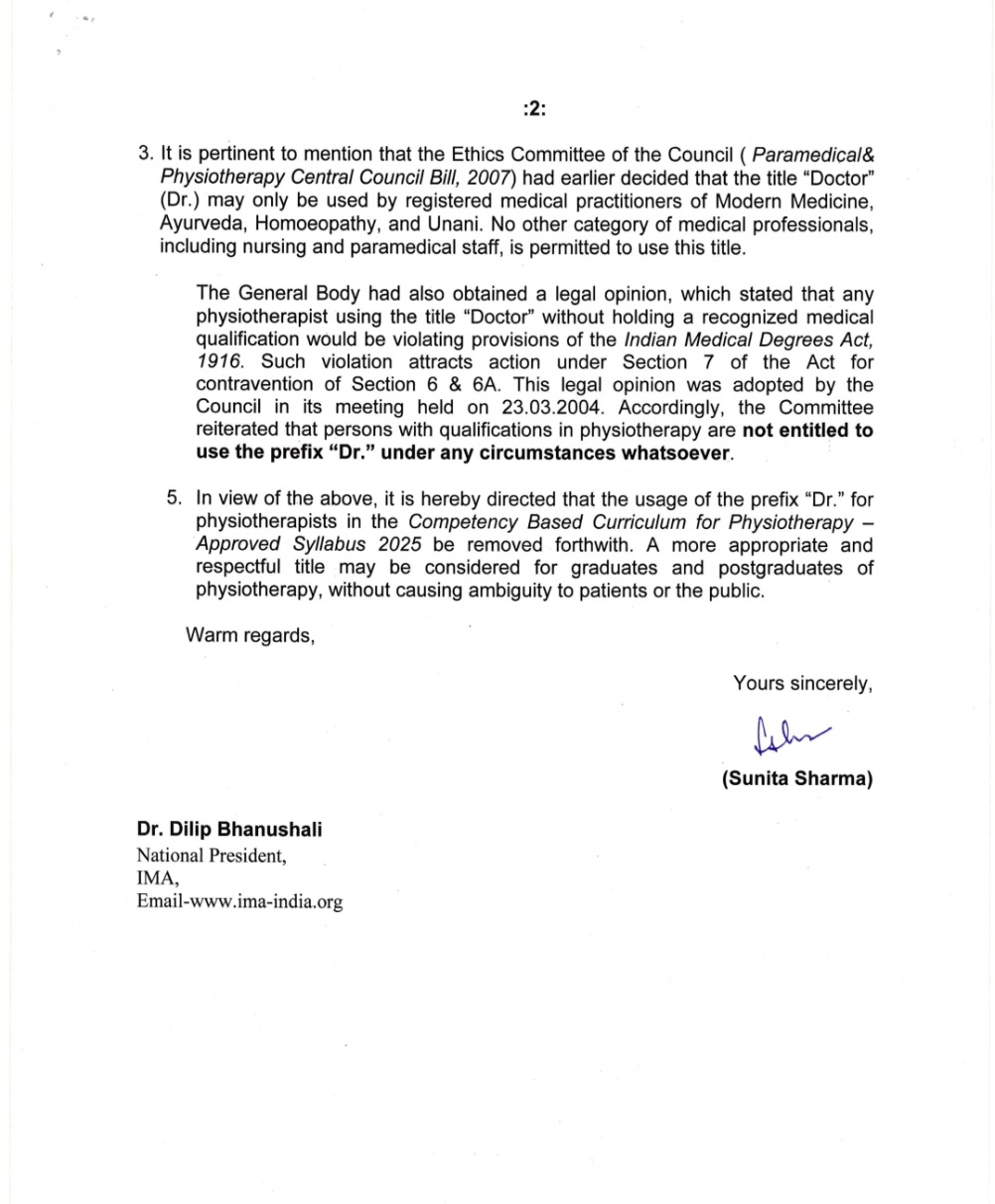
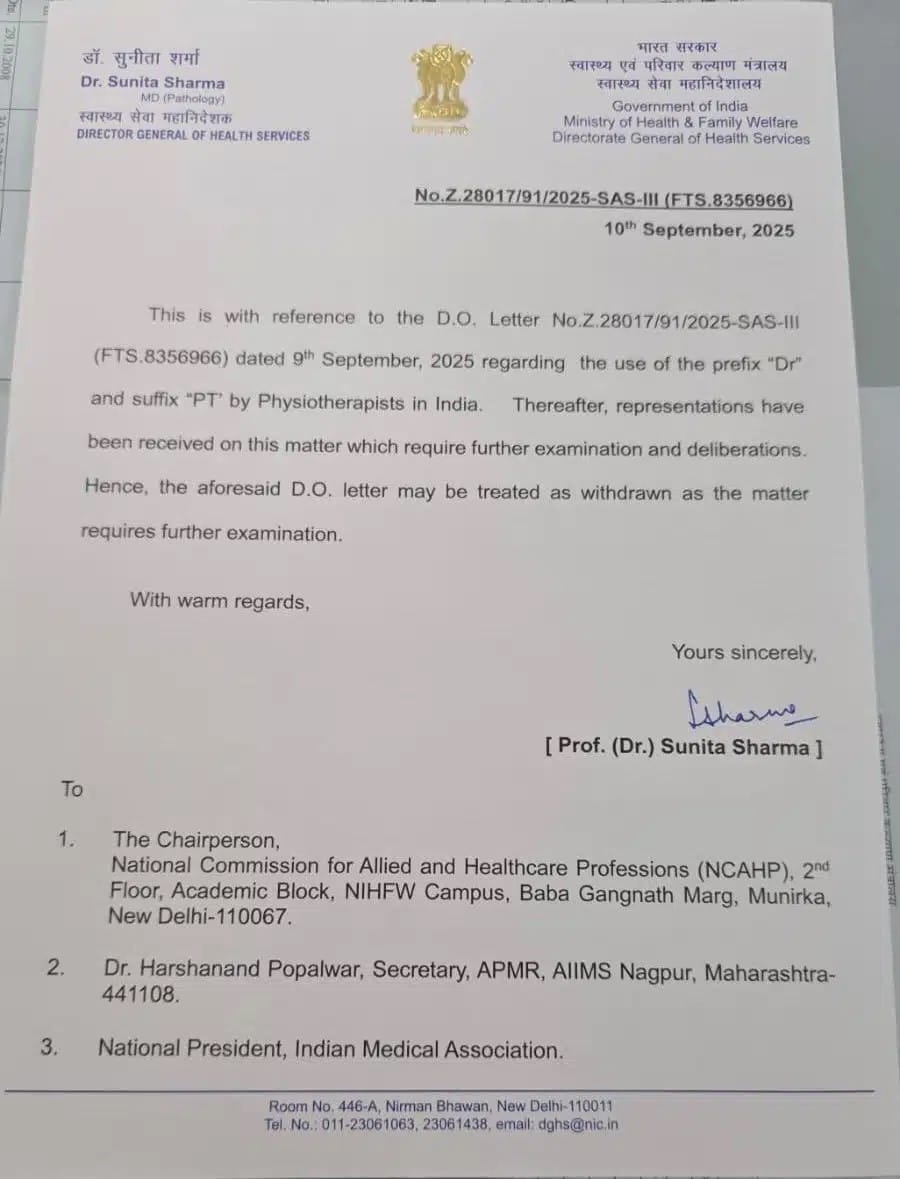
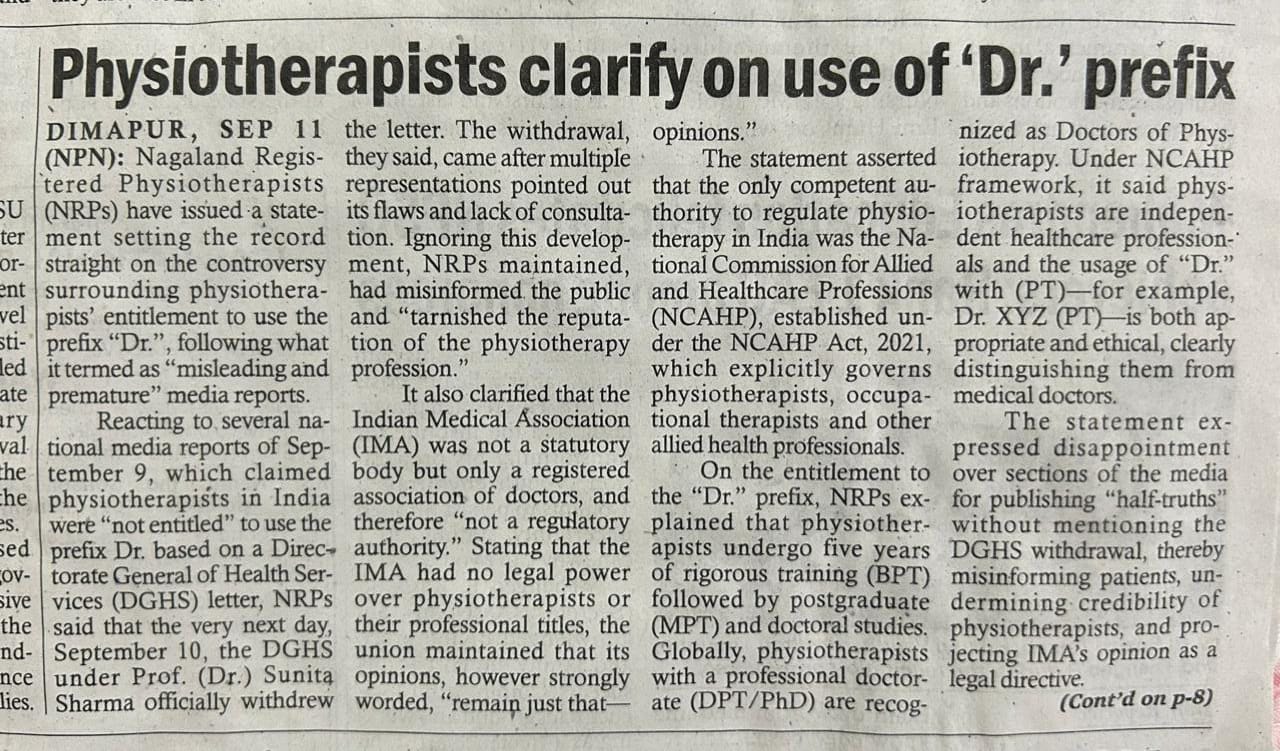
In September 2025, the Directorate General of Health Services (DGHS), Ministry of Health and Family Welfare, issued a communication advising physiotherapists not to independently use the “Dr.” prefix, citing possible public confusion. However, following representations and discussions by physiotherapy associations and professional bodies, the communication was later withdrawn for further review. Subsequent legal observations, including proceedings before the Kerala High Court, indicated that physiotherapists may use the “Dr.” prefix provided they clearly identify themselves as physiotherapists using suffixes such as “PT” and do not misrepresent themselves as medical practitioners.
Future of Physiotherapy Under NCAHP
The implementation of NCAHP is expected to strengthen physiotherapy education and practice in India through:
- Improved educational quality
- Uniform professional standards
- National professional recognition
- Better employment opportunities
- Increased research and innovation
- International alignment of physiotherapy education
- Enhanced patient-centered rehabilitation services
The profession is expected to continue evolving with advancements in rehabilitation sciences, evidence-based clinical practice, digital healthcare technologies, and multidisciplinary healthcare integration.
The College of Physiotherapy at M. B. Gohil Institute of Medical Science and Research Centre is committed to academic excellence, ethical clinical practice, and competency-based physiotherapy education.
The institution focuses on:
- Quality physiotherapy education
- Clinical skill development
- Evidence-based rehabilitation
- Ethical healthcare practice
- Research and innovation
- Community healthcare services
- Professional development of future physiotherapists
The institution follows applicable academic and professional guidelines issued by regulatory authorities and remains dedicated to preparing skilled, compassionate, and competent physiotherapy professionals for the healthcare system.